Español


What is an IPCEI?
The Important Projects of Common European Interest also known as IPCEI (Important Projects of Common European Interest), are strategic initiatives supported by the European Union and their constituent Member States to address major challenges in key areas for Europe’s competitiveness, economic, technological and social development. They are based on collaboration between member states and companies to overcome market failures, incentivizing disruptive innovation projects that require significant investments.
Main features

- Transnational collaboration: IPCEIs involve several countries (at least four) and entities, ensuring development in strategic sectors.
- Broad impact: they generate indirect positive effects, such as technological advances and job creation, beyond the participating countries.
- Contribution to European Union objectives: The projects are focused on a greener, safer and more resilient economy, as well as, in the case of Med4Cure, on more accessible healthcare set out in key EU policy initiatives.
- Dissemination of knowledge: participating companies share results, facilitating technology transfer.
The IPCEI Med4Cure approved on May 28, 2024, is the first health project within the IPCEI framework. The overall budget is up to €1 billion in state aid and a private investment of €5.9 billion over the entire IPCEI period.
This IPCEI supports the transition towards a more sustainable and resilient healthcare value chain, aligning with key EU objectives such as:
- European Cancer Plan.
- European Health Union.
- Pharmaceutical Strategy for Europe.
- European Green Pact
Key focus areas
-
- Bio-resource collection and analysis: Facilitating research and discovery of advanced therapies.
- Development of innovative substances and vaccines: Focused on rare diseases and antimicrobial resistance.
- Sustainable production: Optimization of manufacturing processes to reduce environmental impact.
- Innovative diagnostic models: In areas such as gene therapies, cancer management and resistant diseases.
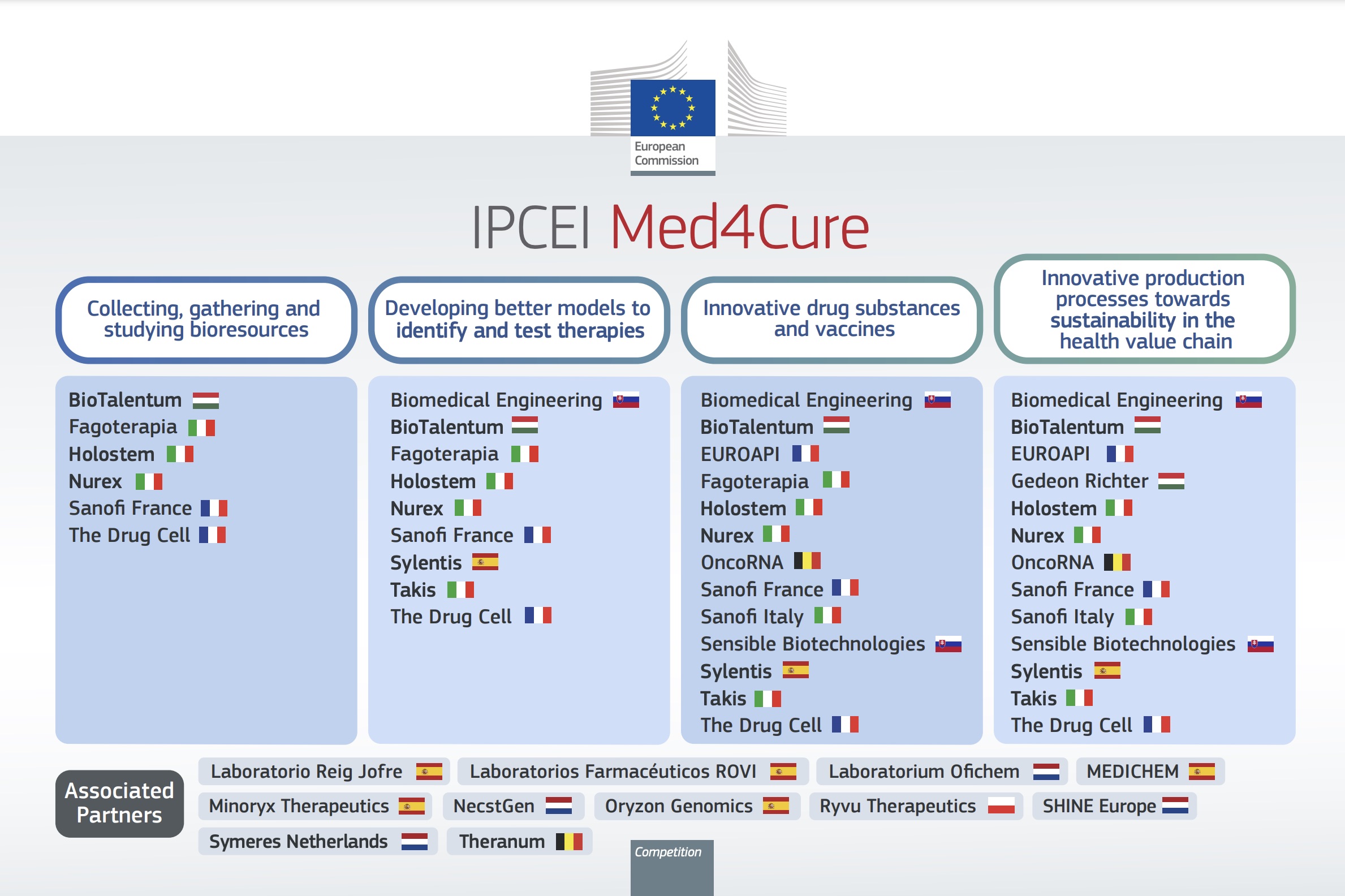
The project comprises 14 subprojects led by 13 companies and 11 associated partners from Belgium, Spain, France, Italy and others. It also includes a wide network of 175 indirect partners to ensure the dissemination of its achievements.