
 Español
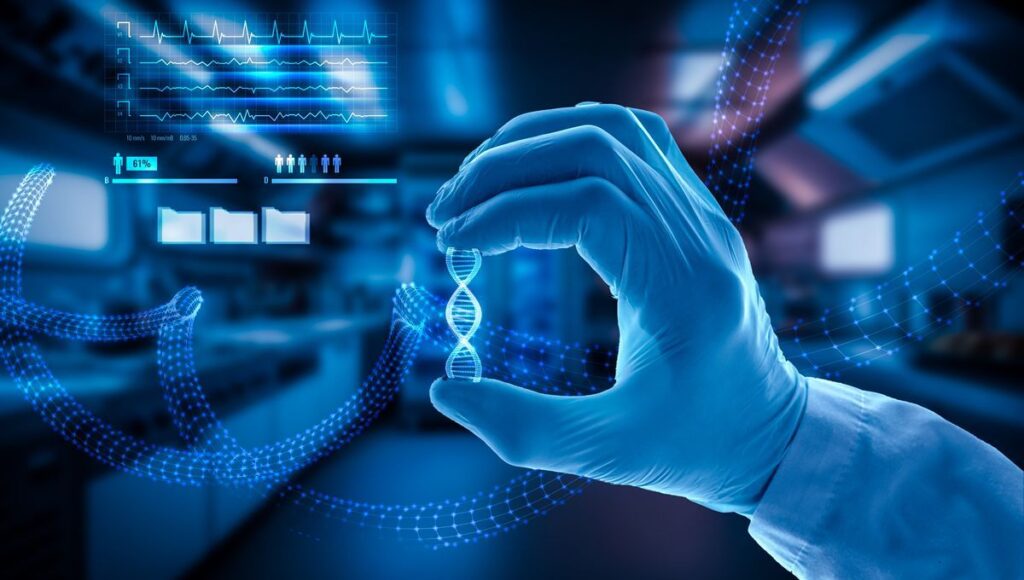
For decades, the search for and optimisation of new therapeutic agents has been an arduous, costly and largely stochastic process. In recent years, however, artificial intelligence (AI) has burst into rational drug design, promising to transform a sector traditionally dominated by trial and error into a predictive and highly efficient discipline. There is still some way to go, but AI is here to stay.
Tamara Martínez, R&D Manager Sylentis (Pharma Mar Group)
What is changing in drug design?
The classical drug discovery process involves the identification of biological targets, the generation of candidate compounds, preclinical testing and, eventually, clinical trials. Each stage is fraught with bottlenecks that increase time, cost and failure rates. Less than 10% of drugs entering clinical trials reach the market.
AI, using machine learning (ML), deep learning (DL), generative and computational modelling techniques, can dramatically accelerate these phases. By training models on massive datasets of bioactivity, ADME/Tox properties and molecular structures, it is possible to predict pharmacological properties, optimise molecules in silico, and prioritise candidates with a higher probability of success in humans.
Real examples
- Insilico Medicine: used generative AI to design a DDR1 inhibitor against pulmonary fibrosis, moving from target to preclinical candidate in just 18 months. Currently, as shown in the table, it has completed phase IIa clinical trials.
- DeepMind AlphaFold: solved protein structures with near-experimental accuracy, eliminating one of the great uncertainties of structural drug design.
- Exscientia: has brought multiple AI-designed molecules into clinical trials in oncology and neuroscience, validating the efficiency of the approach. It pioneered the molecule DSP-1181, considered the first AI-designed drug to enter clinical trials. The time from discovery to the clinic was 12 months, although the company subsequently halted development.
The following is a list of AI-designed drugs and their clinical development status as of end-April 2025.

How does it work in practice?
The main applications of AI in drug discovery include:
- Identification of therapeutic targets: Analysis of omics data using neural networks to predict new biological targets relevant to human pathology.
- De novo molecule design: Use of generative adversarial networks (GANs) or molecular transformers to create new chemical structures optimised for specific pharmacodynamic and pharmacokinetic parameters.
- Property prediction: Advanced QSAR models, combined with deep learning, allow prediction of solubility, permeability, liver metabolism, liver toxicity and cardiotoxicity, among others.
- Lead optimisation: Bayesian optimisation algorithms or genetic evolution methods guide the iterative improvement of compounds based on multiple objectives.
- Optimisation of clinical trial design, and simulation of virtual clinical trials: Population modelling to predict efficacy and safety outcomes in digital cohorts, reducing the need for extensive pre-clinical studies.
- Manufacturing optimisation, process improvement and control via AI, the Internet of Things (IoT) and automation are reshaping manufacturing to optimise manufacturing, process control and environmental efficiency. This can help address operational inefficiencies and missed growth opportunities. Retrosynthetic planning algorithms, such as those based on Graph Neural Networks or chemical transformers, allow the design of cleaner synthetic routes and the prediction of optimal reaction conditions.
- Intelligent automatedsynthesis: This includes; ML models that can identify catalysts, solvents and temperatures improving efficiency and minimising waste; AI-guided robotic laboratory platforms such as DeepMatter or IBM RoboRXN that optimise synthesis conditions by reducing energy and solvent consumption through reinforcement learning enabling predictive and more sustainable scalability; and use of digital twins or demand prediction models that can help increase synthesis efficiency.
Remaining challenges
Despite progress, many technical and ethical challenges remain:
Data quality and bias: Many public datasets (e.g., ChEMBL, PubChem) contain errors, positive publication bias, or lack sufficient clinical heterogeneity. Input quality”, data curation and data normalisation continue to limit the robustness of models.
Modelinterpretability: Some models are currently a” black box”. Explainable AI (XAI) initiatives aim to make model decisions understandable, especially crucial in regulated sectors such as the pharmaceutical industry.
Experimental validation: Success in silico does not always translate into success in vitro or in vivo. Biological validation remains essential. Models must be fed back with data from clinical success backwards. The creation of federated platforms and data standardisation for model feedback would help make this leap. It would enable the training of more powerful, robust and generalisable models without breaching privacy or trade secrecy. This would reduce population biases and increase the confidence of regulators, however, data is siloed, heterogeneous and there are significant confidentiality and compliance (GDPR, HIPAA) issues for companies.
Regulatory aspects: Current regulatory frameworks (EMA, FDA) are still adapting to drugs Data handling 56 farmaBIOTEC #19 designed by automated systems, especially regarding traceability and accountability of results. Europe is leading the way in regulation with AI Law (Regulation (EU) 2024/1689) in incremental development laying down harmonised rules on artificial intelligence. It is the first comprehensive legal framework on AI worldwide.
Ethical considerations: Assigning intellectual property over autonomously designed AI molecules raises unresolved legal and bioethical questions.

Futuretrends
The main lines of innovation in the sector are oriented towards:
– Multimodal models: Integration of structural, omics, clinical and imaging data to build more holistic representations of diseases and targets.
– Explainable and causal AI: Systems capable of explicitly reasoning about molecular design decisions, increasing confidence in clinical and regulatory environments.
– Virtual organ and tissue simulation: Computational modelling of human organs to predict toxicity and efficacy before moving to real clinical trials.
– End-to-end automation: from target identification to automated compound synthesis, creating true AI-based “molecule factories”.
– Drug repurposing at scale: Massive use of ML to reanalyse existing drug databases for new therapeutic indications, a crucial strategy in contexts such as rare diseases or pandemics.
Overview in Spain, Europe and the US
Spain: There are growing efforts, although still limited in scale, led by centres such as the Barcelona Supercomputing Center (BSC), the CNIO and university groups such as Bioinformatics Barcelona (BIB), Nostrum Biodiscovery, Omnios Lifecience (Barcelona). Startups such as Innoplexus Iberia or companies such as Sylentis (Pharma Mar group, Madrid) integrate AI into their pipelines for drug development.
In addition, through Sylentis’ SYOLIGO project, qualified as an Important Project of Common European Interest (IPCEI), the company is expanding its capabilities and predicting candidates to increase its pipeline.
Europe: Horizon Europe dedicates substantial funds to AI projects in biomedicine, but challenges of fragmentation between Member States, lack of a real common digital market and lower availability of clinical data compared to the US remain, which we hope can be resolved with the European Health Data Space Regulation (EEDS).
USA: Unquestionable leadership. Companies such as Atomwise, Recursion Pharmaceuticals, BenevolentAI and Google DeepMind Labs set the pace. The close collaboration between academia, industry and regulatory agencies is helping to bring innovation to market quickly.
Asia: Debating leadership with the US. Companies such as InSilico Medicine (China), based on computational chemistry, XtalPi (China): combination of quantum physics, AI and automation to discover and optimise bioactive molecules. PeptiDream (Japan): AI-based peptide selection for oncology and infectious diseases, and Korea’s Standigm: Designing new molecules from scratch and optimising pipelines in drug discovery.
The integration of AI into drug design is not a ‘plus’, but a paradigm shift. The next generation of medicines will inevitably be designed, optimised and validated with the support of increasingly sophisticated AI systems.
However, far from eliminating the human role, this change requires more integrative scientists, able to dialogue with algorithms, interpret models, and translate the predictive power of the machine to the real clinical and pathophysiological context.
We are witnessing the beginning of a revolution. The question is not whether AI will transform drug discovery, but how fast, and who will adapt first. Whoever controls biomedical AI today will control tomorrow’s therapies and markets.

