
 Español
In recent years, RNA-based therapies have gained prominence, with six recent marketing approvals between 2023 and the first half of 2025. However, the technology faces significant limitations such as its short half-life and the difficulty of effective delivery to the appropriate tissues.
A new article published in Genetic Engineering & Biotechnology News offers insight into how circular RNA could continue to drive this type of therapy forward.
The RNA RNA, the basis of the majority of therapies currently available, is susceptible to degradation by nucleases. This characteristic requires administering more frequent doses and developing delivery complexes complex delivery systems, such as lipid nanoparticles, to protect the molecule and ensure its arrival at the point of action.
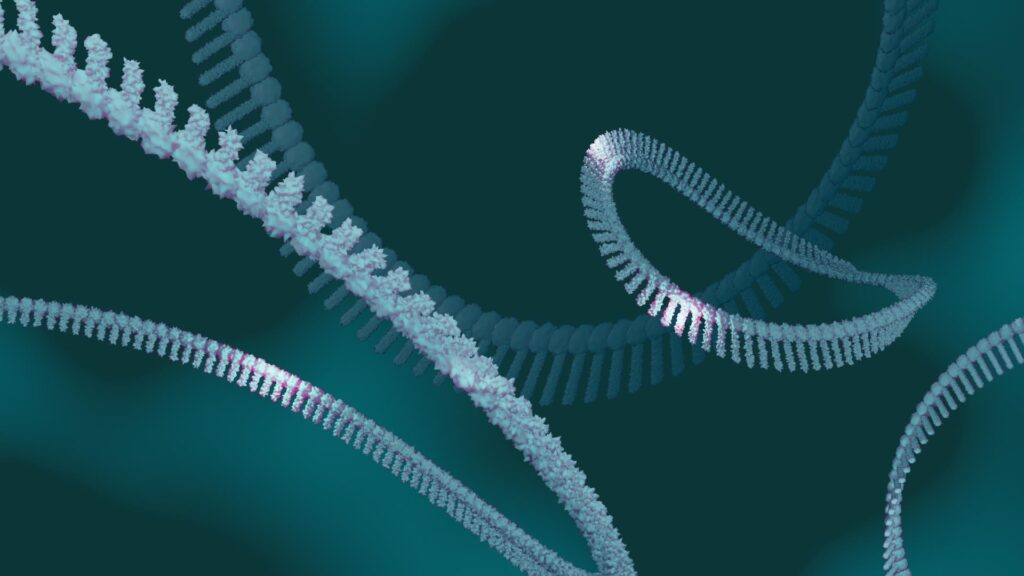
Circular RNA (circRNA) offers a promising solution: as it does not have free ends it is much more resistant to degradation, which a13> gives it a significantly longer average lifespan within the organism. This simple change in structure opens the door to therapies that are more long-lasting, predictable and effective.
However, beyond its stability, the ARNcirc also enables new forms circRNA also enables new forms of a12> control over the production of proteins in the body, which is key to diseases where precise dosing is critical.
Among the emerging strategies in the field of RNA therapies is the development of circular forms of RNA designed to offer greater stability and control over gene expression. These molecules can be modified to adjust both the amount and duration of protein production, representing an advance over some of the limitations of linear RNA.
In preclinical models, this type of RNA has been shown to maintain its activity during periods of increased oxidative stress. a9> activity during periods more prolonged, which suggests the possibility of spacing out the time between doses of medication.
In the same way as Sylentis with its platform for AI for the design of oligonucleotides, a8> AI for the design of therapeutic oligonucleotides SIRFINDER, one can design circRNA with AI. . This computational approach seeks to improve the predictability of the behaviour of biological a9> of molecules from the early stages of development. The most innovative aspect of this approach is that it allows for the exploration of vast spaces of sequence. a24> vast spaces of sequence to optimise the behaviour of RNA in function of the therapeutic target . This accelerates the phase of development preclinical and improves the quality of the molecules candidates from the outset.
For projects such as SYOLIGO, which explore the potential of therapeutic oligonucleotides, these a7> the oligonucleotides therapeutic, these new technologies represent a clear inspiration and an opportunity for innovation. The future of personalised medicine could depend on how we redesign the fundamental structures of healthcare. we redesign the fundamental structures of our biological tools.

