
 Español
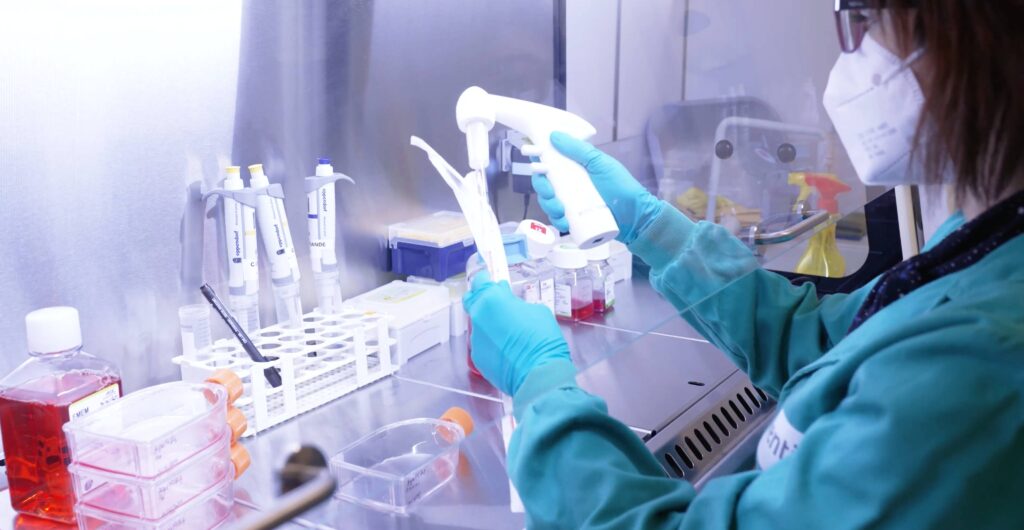
The manufacture of therapeutic oligonucleotides is advancing, driven by the ability of these molecules to treat diseases that until now lacked effective options. However, synthesising oligonucleotides is only part of the equation: analytical methods are also a key component in ensuring that the final product is safe, effective and complies with strict regulatory requirements.
Analytics is not understood as a subsequent step, but rather as a strategic axis from the initial stages of development to large-scale production.
The relevance of analytical methods
Although oligonucleotides are relatively short chains of nucleotides, their analysis is complex. Each synthesis process inevitably generates impurities: truncated fragments, chemical variants, reagent residues, or even degradation products.
Analytical methods enable critical questions to be answered:
- Is the synthesised sequence correct?
- What is the purity level of the product?
- Are there any unwanted modifications or by-products?
- Will it remain stable during storage and distribution?
Answering these questions is what gives researchers, clinicians, and regulators confidence that an oligonucleotide-based therapy is ready to move forward to the patient.
Key techniques for characterising oligonucleotides
In practice, laboratories combine different techniques to obtain a complete picture of the product. High-performance liquid chromatography (HPLC), whether in reverse phase or ion exchange mode, is essential for separating molecules that are very similar to each other. Capillary electrophoresis offers another perspective, allowing purity to be quantified and truncated fragments to be detected.
Mass spectrometry, especially in combination with liquid chromatography (LC-MS), is indispensable for confirming the identity of the molecule, detecting chemical modifications and characterising possible impurities. Classical techniques such as UV spectrophotometry are also used for general quantification, but always complemented by more sophisticated methods.
Beyond the tools, what matters is the orthogonal approach: not relying on a single analysis, but using several complementary methods that reinforce the robustness of the results.
Specific challenges in oligonucleotide analytics
The main challenge is the complexity of the samples. Oligonucleotides not only have secondary structures and chemical modifications, but their large-scale production involves the massive use of solvents and reagents that can interfere with the analyses.
Another critical issue is scalability. An analytical method that works in the laboratory may not be suitable in an industrial manufacturing environment, where the volume of material and diversity of impurities is much greater. In addition, regulatory requirements demand methods that are validated in terms of precision, accuracy, sensitivity, and robustness, adding an extra layer of complexity.
Finally, sustainability is also a factor to consider. Analysis consumes resources, and it is essential to develop approaches that reduce waste and optimise the use of reagents.
The future of analytical methods in oligonucleotides lies in innovation. Emerging technologies such as next-generation sequencing, the use of microfluidic systems, and enzymatic synthesis open the door to new ways of characterising and producing these molecules. At the same time, collaboration between industry, academia, and regulators will be essential to establish common standards that facilitate the development and approval of oligonucleotide-based therapies.
Sources:
Oligonucleotides: Synthesis and Manufacturing Hurdles

