
 Español
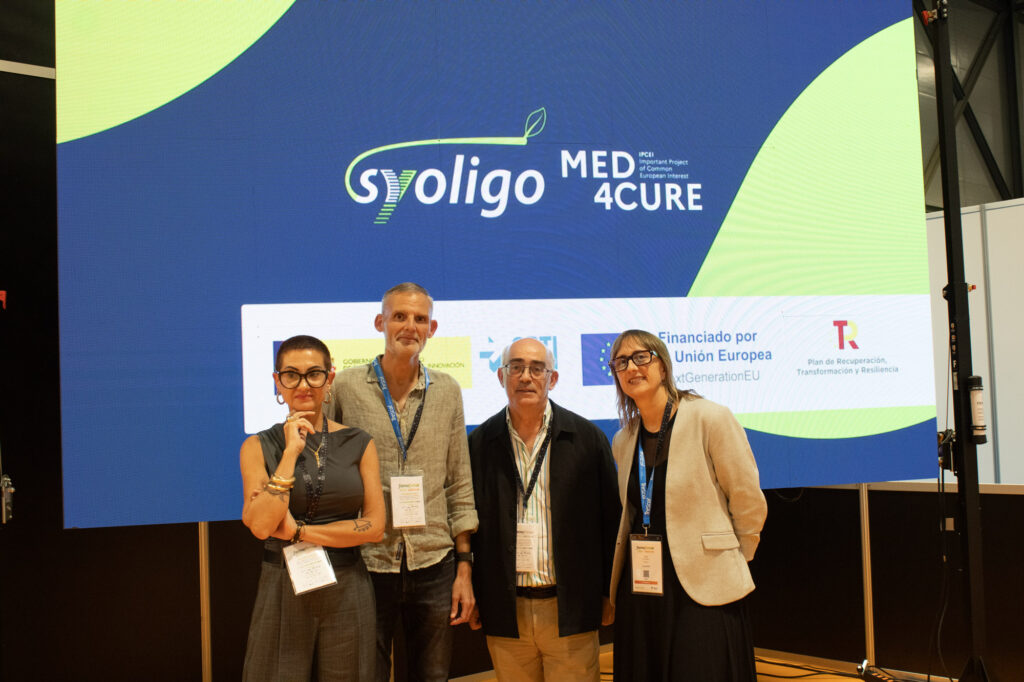
The latest edition of Farmaforum 2025, held in Madrid, once again brought together the main players in the pharmaceutical and biotechnology industry. Among the protagonists was Sylentis, which actively participated in two round tables as part of its SYOLIGO project, which forms part of the IPCEI Med4Cure, contributing its vision on the sustainable manufacture of therapeutic oligonucleotides and public-private collaboration as a driver of innovation.
Sustainability in oligonucleotide production
El 18 de septiembre, Lola Company Mateos, Head of Operations en Sylentis, organizó y moderó la sesión “Application of new strategies for the sustainable manufacture of therapeutic oligonucleotides and to ensure their viability over time”.
Leading experts participated in this round table discussion:
- Ramon Eritja – Institute of Advanced Chemistry of Catalonia (IQAC-CSIC)
- Ramon Gómez-Arrayas – Autonomous University of Madrid
- Nuria Eugenia Campillo Martín – AItenea Biotech
The conversation addressed the main key issues included in the SYOLIGO project, such as sustainability, scalability and regulation in the manufacture of therapeutic oligonucleotides, highlighting that scientific and technological collaboration is essential for transferring innovation from the laboratory to the patient.
In addition, the importance of IPCEIs (Important Projects of Common European Interest), the role of responsible water use in production processes, and the potential of new synthesis methods as essential tools for moving towards more efficient and sustainable manufacturing were highlighted.
In this context, the European SYOLIGO project, led by Sylentis, was presented. It seeks to develop more sustainable, scalable and internationally competitive oligonucleotide manufacturing processes, consolidating Spain as a benchmark in this strategic area.
Collaboration for innovation in diagnosis and therapy
On 17 September, Tamara Martínez, R&D Director at Sylentis, participated in the round table discussion entitled “Technology and Health: Collaboration for Innovation in Diagnosis and Therapy”, alongside experts from GeneVector, Kymos Group and Leitat.
During her speech, Tamara emphasised the importance of IPCEIs and public-private partnerships as key levers for driving innovation in healthcare and ensuring that advances reach the market in a sustainable manner and with a real impact on patients.

This debate highlighted how cooperation between companies, research centres and administrations is emerging as an essential factor in addressing future challenges in diagnosis and therapy.
Sylentis’ participation in Farmaforum 2025 reaffirms its commitment to the research, development and manufacture of oligonucleotide-based therapies from a sustainable and collaborative perspective and forms part of the spillover effects of the IPCEI project.
The discussions not only highlighted the strategic role of IPCEIs and public-private partnerships, but also paved the way for further talks on resource efficiency, technological innovation and regulatory feasibility.
With SYOLIGO, Sylentis reaffirms its commitment to bringing innovation from the laboratory to the patient, consolidating Spain and Europe as a benchmark in oligonucleotide production and opening up new opportunities for the biomedicine of the future.

